When Something That Looks Like Pure Fun Quietly Turns Into Genuine Learning
When planning an educational tour, the most powerful moments are often the ones that catch students completely off guard - when something that looks like pure fun quietly turns into genuine learning.
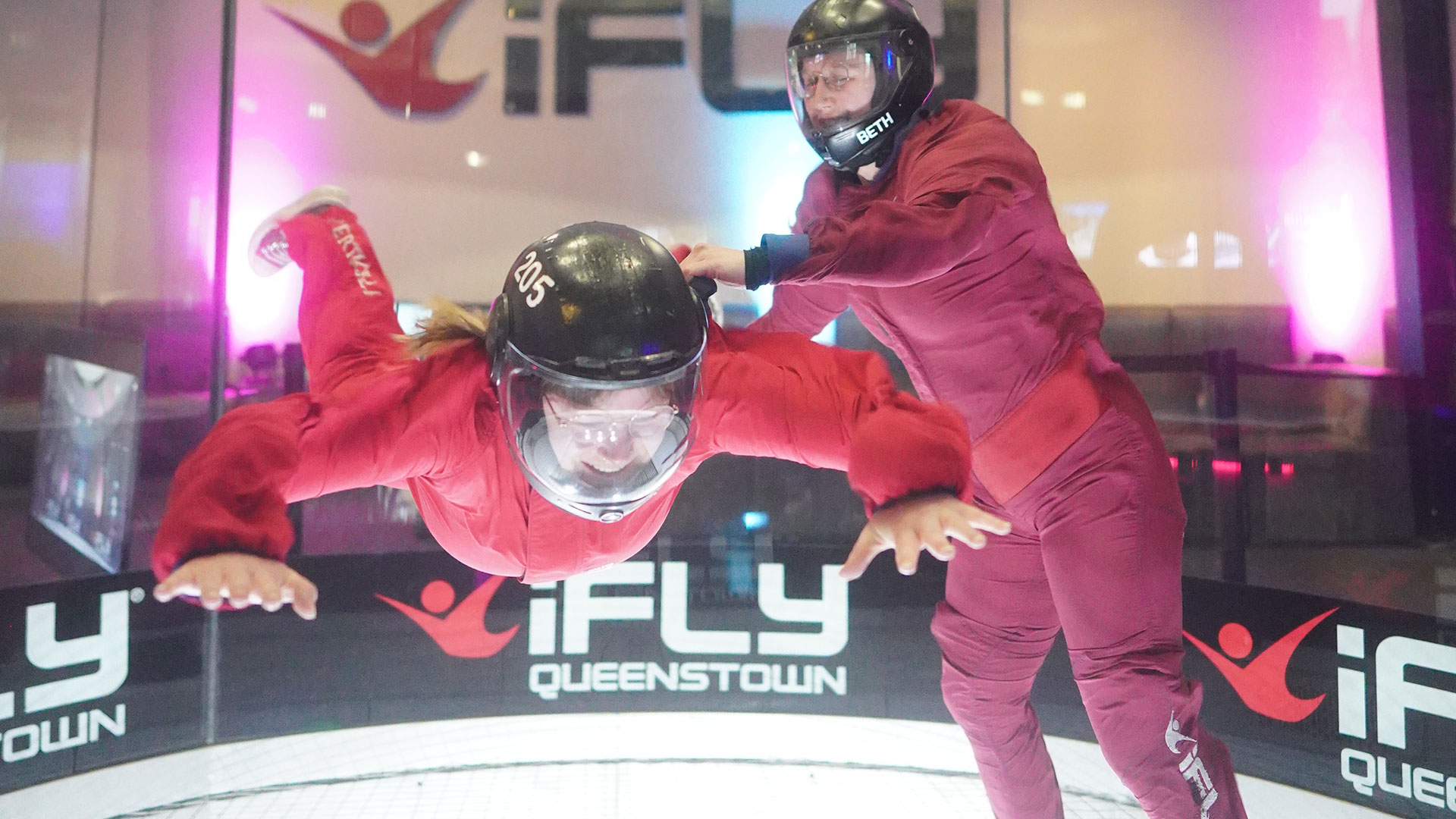
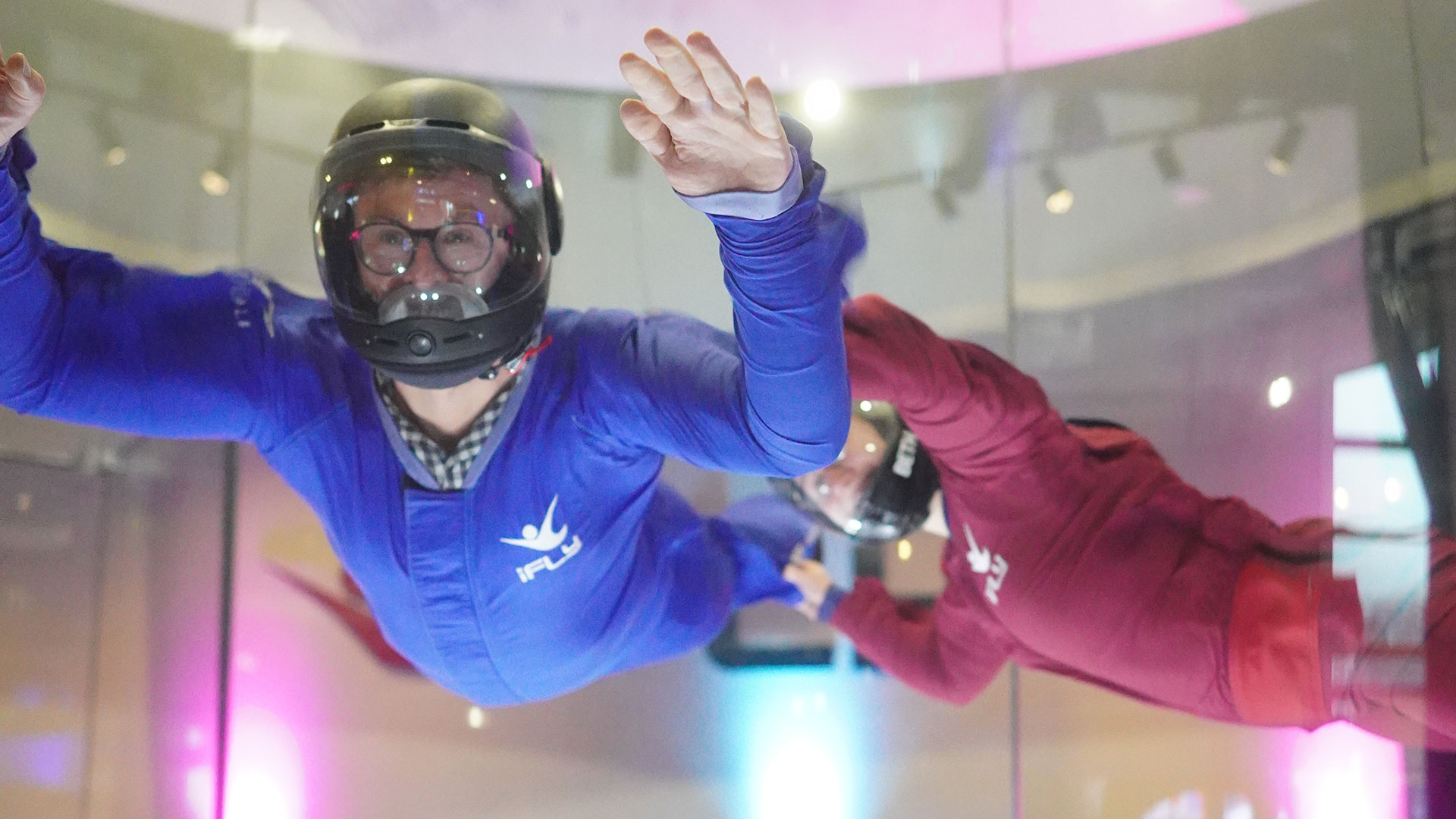
That's exactly what happened when our team at Educating Adventures visited iFLY Queenstown to experience their STEM programme firsthand. We stepped into the wind tunnel expecting an adrenaline rush. What we didn't expect was how immediately and vividly the physics came to life - the precise relationship between body position, airflow, and stability made tangible in a way no diagram ever could.
The Science Behind Human Flight
Indoor skydiving uses advanced vertical wind tunnels to replicate the sensation of freefall through carefully controlled airflow. Powerful fans generate a column of air strong enough to counter gravity and keep participants suspended in flight.
What makes the experience particularly valuable for educational travel is the way it naturally demonstrates core STEM concepts in action. Students can explore:
• Aerodynamics and airflow
• Newton's Laws of Motion
• Lift, drag, gravity, and resistance
• Velocity and acceleration
• Engineering systems and turbine technology
Rather than observing these principles through diagrams or textbooks alone, students experience the direct relationship between body position, air resistance, balance, and movement in real time. Even small adjustments in posture immediately affect stability, rotation, speed, and lift - turning abstract scientific concepts into live, physical experimentation.
Predicting Flight Velocity and Applying Maths in Real Time
One of the most engaging educational aspects of iFLY is the opportunity to connect mathematical theory with physical outcomes.
Students can investigate how variables such as body mass, surface area, wind speed, and body positioning influence flight performance inside the tunnel. Before flying, groups can make predictions about velocity, drag, and stability based on principles they've studied in class - then test those predictions in the most memorable way possible.
During and after the experience, students can reflect on questions such as:
• How does increasing surface area affect lift?
• Why do different body positions create different flight responses?
• How does airflow velocity change based on body weight?
• What forces must remain balanced for stable flight?
For physics and mathematics students, the experience creates an engaging platform for applied learning, data analysis, estimation, and scientific observation. Teachers can also integrate it into pre-tour lessons or post-tour assignments focused on motion, force diagrams, energy transfer, or engineering design challenges.
Engineering, Technology, and Innovation in Action
Beyond the flight itself, iFLY offers genuine insight into the engineering systems required to make human flight possible in a controlled indoor environment. Students encounter advanced mechanical systems, airflow management technology, safety engineering, and precision operational design - all working together seamlessly in a high-energy setting.
This creates valuable connections to wider STEM pathways including aerospace engineering, aviation technology, robotics, sports science, and industrial design. For many students, seeing complex systems operating in an exciting, accessible environment is what makes STEM careers feel genuinely within reach.
Destinations like Houston and Orlando are particularly powerful additions to STEM-focused tours given their broader links to aerospace, innovation, and technology industries. Meanwhile, Queenstown adds another dimension through its reputation for adventure innovation, applied science, and experiential learning environments.
For many students, seeing complex engineering systems operating in a high-energy, engaging environment helps STEM careers feel more relatable and accessible.
Why Experiential Learning Matters
One of the biggest challenges in education is helping students understand why theoretical learning matters beyond the classroom. Experiences like iFLY bridge that gap naturally.
Students aren't memorising equations or copying definitions. They are testing concepts, making observations, adapting in real time, and seeing immediate cause-and-effect relationships play out around them. This kind of learning tends to stick - creating stronger engagement, deeper retention, and greater curiosity, particularly for students who don't typically connect with traditional classroom approaches.
The confidence-building element is equally significant. Flying in the tunnel requires focus, resilience, and trust in both the instructors and the systems around you. Students leave not only with a stronger grasp of STEM concepts, but with a real sense of personal achievement.
A High-Impact Addition to Educational Tours
Adding iFLY to an educational itinerary creates far more than a recreational break between academic visits. It creates the kind of memorable learning moment students are still talking about on the bus home - and long after they return.
Having experienced the iFLY STEM programme ourselves, we can say with confidence: it earns its place on any school tour itinerary.
If you'd like to include iFLY Queenstown, Orlando or Houston in your next educational tour, get in touch with the Educating Adventures team - we'd love to help you build an experience your students won't forget.